
Top
=

Role profile and skills of staff strictly defined by critical levels of technical specifications and quality provided
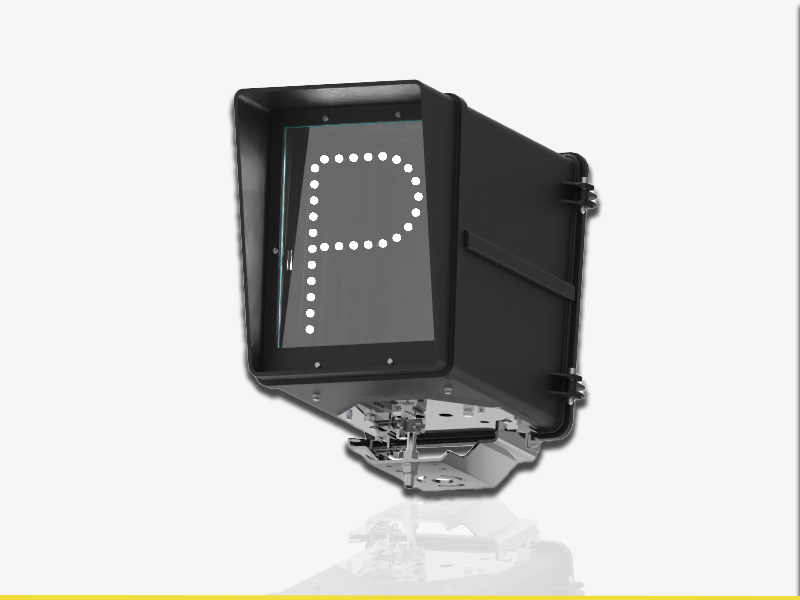
3D Design CAD

Our technical department is equipped with advanced CAD systems engineered for the design and drafting of high-precision 2D layouts and 3D models.

We develop accurate three-dimensional geometric models utilizing a wide range of industrial inputs:

  • Plan, elevation, sectional views, and 2D technical drawings
  • Preliminary sketches, concept designs, and technical briefs
  • Physical models, mock-ups, or legacy parts (via Reverse Engineering)

Product Engineering & Industrialization

We optimize every project through rigorous Design for Manufacturing (DFM) principles to ensure seamless mass production, aligning the blueprints with our in-house manufacturing capabilities:

  • Injection molding and thermoplastic processing
  • Rapid prototyping utilizing industrial FDM 3D printing technologies
  • Metal stamping and progressive die shearing

Our Industrial Workflow: From Concept to Finished Product
  1. Feasibility & Critical Flaw Analysis
    We manage the engineering lifecycle right from the conceptual phase. We proactively pinpoint critical industrial design constraints to implement optimal geometric and structural solutions. This collaborative phase incorporates customer requirements, technical standards, and experimental data gathered from physical testing on prototypes built in-house with our Fortus 450mc system.
  2. Advanced Modeling & Sign-off
    We proceed with comprehensive parametric solid modeling. Every detail of the project is thoroughly reviewed and evaluated alongside the client to secure final technical sign-off prior to production tooling.
  3. Executive Engineering & Release
    The final stage entails releasing the complete industrial documentation package required for manufacturing: assembly blueprints, detailed construction drawings with geometric dimensioning and tolerancing (GD&T), and comprehensive Bills of Materials (BOM).
3D Design CAD

3D PRINT

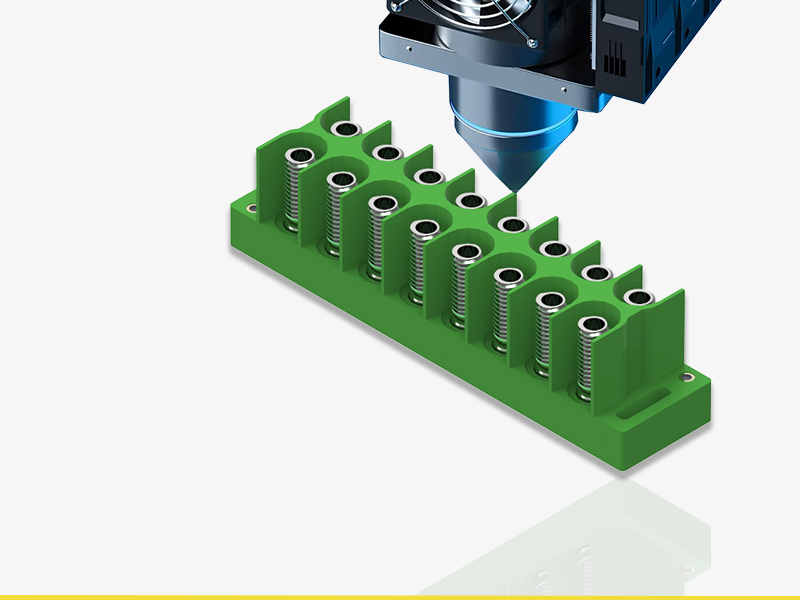
At Plastiroma Srl, we utilize the Fortus 450mc industrial 3D printer, an advanced technology engineered to redefine speed, performance, and precision standards. This enables us to manufacture robust, fully functional prototypes with mechanical properties completely analogous to those of the final end-use product.

Key Advantages of Our Technology

  • Production-Grade Thermoplastics
    We employ a comprehensive selection of standard, engineering, and high-performance thermoplastics, identical to those used in traditional manufacturing processes.
  • High-Volume Build Capacity
    We feature a generous build envelope of 406 x 355 x 406 mm, ideal for both large-scale components and low-volume batch production.
  • Millimetric Precision
    We guarantee a component dimensional accuracy of ± 0.127 mm.

Technical note: Final accuracy is geometry-dependent; specifications are statistically calculated based on a 95% dimensional yield.
3D PRINT

MOULD DESIGN AND CONSTRUCTION

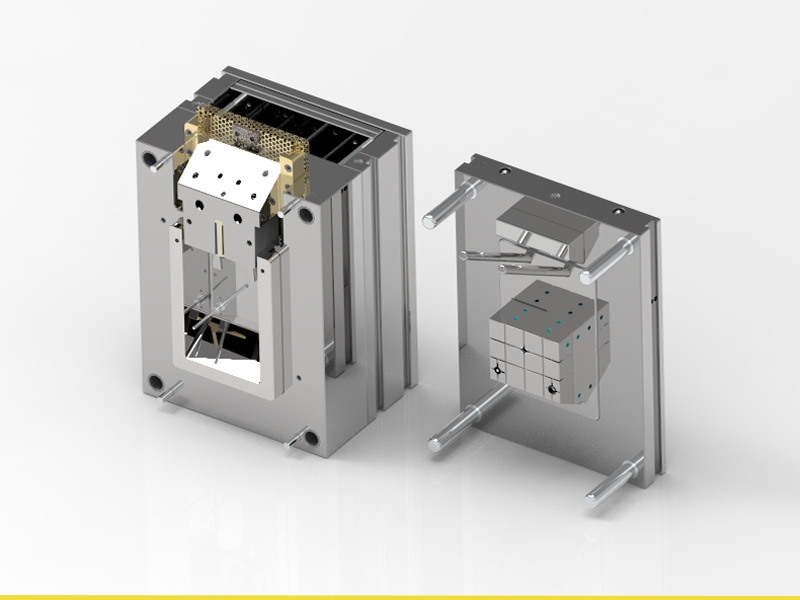
Leveraging our consolidated expertise and next-generation technologies, we serve as the premier strategic partner for the co-design, engineering, and tooling construction of all types of industrial equipment:

  • Injection molds for thermoplastic materials
  • Metal stamping, blanking, and progressive dies
  • Precision mechanical fixtures and checking/positioning jigs

From CAD/CAM Design to Precision Toolroom Operations

Our streamlined workflow bridges meticulous digital modeling via advanced CAD/CAM platforms with the manufacturing excellence of our in-house facility. Our toolroom is equipped with a state-of-the-art machinery fleet including:

  • High-speed 3-axis and 5-axis CNC machining centers
  • Advanced wire EDM (WEDM) and sinker EDM systems
  • Conventional and CNC lathes
  • Surface and cylindrical grinders for micrometric surface finishes

This complete control over the supply chain guarantees premium quality tooling that seamlessly combines exceptional dimensional precision, cost-efficiency, operational durability, and high throughput optimization during industrial molding cycles.
MOULD DESIGN AND CONSTRUCTION

MOULDING DEPARTMENT

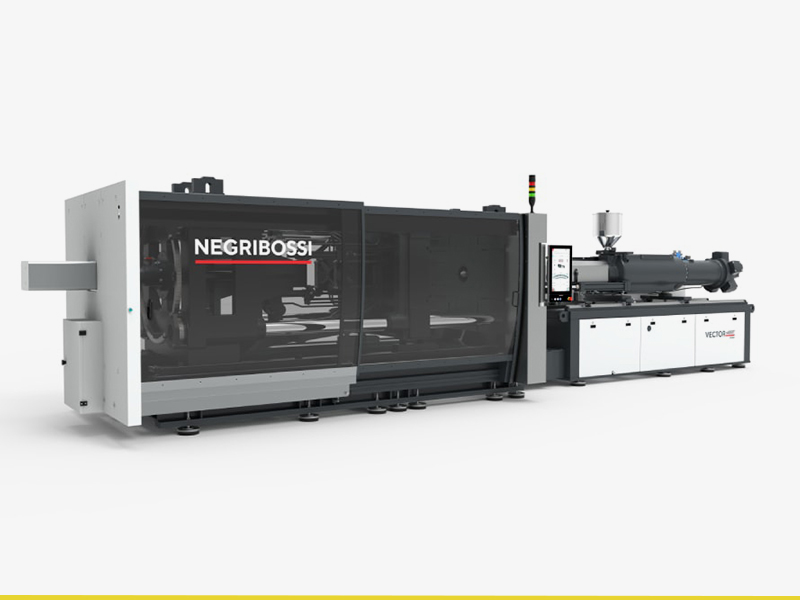
Plastiroma’s manufacturing infrastructure relies on a state-of-the-art machinery fleet for plastic injection molding. Thanks to a scalable operational flexibility, we are fully equipped to produce both high-precision technical parts and large-scale industrial components.

Production Capacity & Clamping Force

  • Machinery Fleet: Advanced equipment providing clamping forces ranging from 60 to 1,300 tons.
  • Shot Weight Capacity: Molding capabilities for plastic components spanning from a few grams up to a maximum weight of 9 kg per single cycle.
  • Product Capabilities: Core specialization in custom industrial technical articles engineered to client geometric specifications.

Ancillary Technologies & Process Peripherals

To guarantee superior dimensional stability and the total elimination of structural defects in the processed polymers, our molding facility is supported by integrated industrial ancillary systems:
  • Material Pre-treatment: Advanced drying ovens and dry-air dehumidifiers designed for the hygroscopic removal of residual moisture from raw resin pellets prior to injection.
  • Advanced Thermoregulation: Precision mold temperature control units and industrial chillers engineered for optimized cooling cycles and minimized cycle times.
  • Automation & Logistics: Automatic pneumatic feeders, conveyor belts equipped with integrated sprue separators, and press-side granulators for efficient and sustainable scrap recycling.
MOULDING DEPARTMENT

LABORATORY AND INSTRUMENTS

We guarantee the highest industrial quality standards through our advanced in-house testing and metrology laboratory. We execute rigorous structural and dimensional inspections to certify the total compliance of molded components with the technical blueprints, specifications, and geometric tolerances required by the client.

Mechanical Testing & Material Characterization

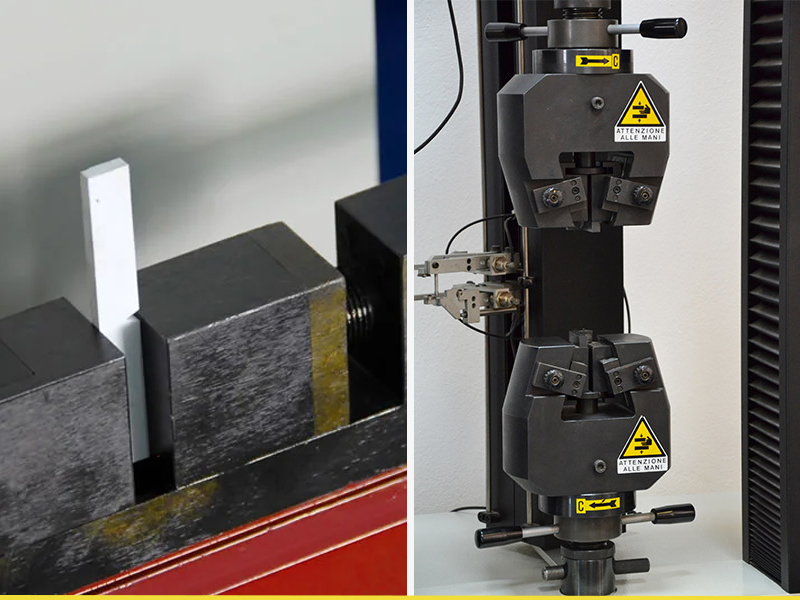
Our facility is equipped with an environmental test chamber for accelerated aging tests and advanced equipment for the physical-mechanical characterization of technopolymers:

  • Tensile & Elongation Testing: Evaluation of ultimate tensile strength, yield points, and material ductility.
  • Flexural & Compression Testing: Assessment of elastic modulus, structural stiffness, and static load capacity.
  • Izod Impact Resistance: Measurement of impact strength, energy absorption, and brittle fracture behavior.
  • Physical Properties Analysis: Densitometric testing and precise evaluation of polymer water/moisture absorption rates.
  • Surface Hardness Testing: Localized indentation testing to verify Shore and Rockwell hardness scales.

Metrology Equipment & Dimensional Inspection

We constantly monitor every phase of the injection molding cycle to eliminate process drift. Our quality control workflow relies on regularly calibrated and certified digital measuring instruments:
  • Geometric Quality Control: Optical profile projectors, digital calipers, vernier height gauges, and micrometers for strict tolerances.
  • Optoelectronic Measurement: Industrial luxmeters for accurate photometric data and optical property monitoring.
  • Electrical Properties Testing: High-precision digital multimeters for the functional testing of technical and insulating components.
LABORATORY AND INSTRUMENTS